
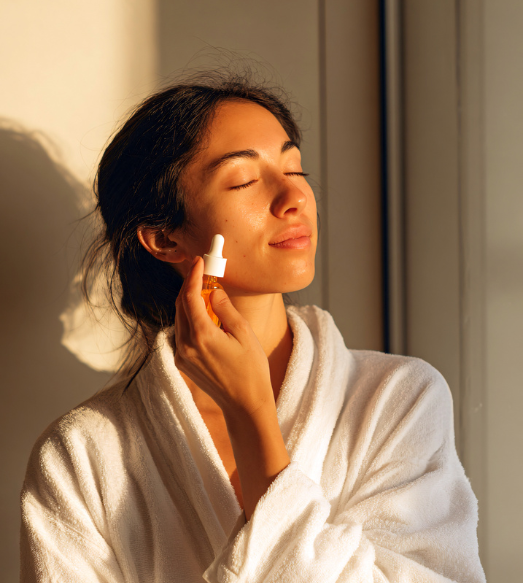
Most skincare products sit on the surface of your skin. They hydrate, they brighten, they smooth texture—but they don't fundamentally change how your cells function. Isabel Greiner, founder and CEO of Intuisse, set out to build something different: a premium skincare line powered by pharma-grade, liposomal NAD⁺ that works at the intracellular level to support long-term cellular health alongside immediate visible results.
In this episode of The Growth Layer, Isabel shares how she transitioned from building global brands at Estée Lauder and Jo Malone to launching a science-backed skincare company grounded in longevity research. We discuss what NAD⁺ actually does in skin, why provenance and cold-chain handling matter for efficacy, how Intuisse balances education with conversion, and what it takes to scale a premium brand across DTC, med spas, and Amazon without diluting credibility.
From Estée Lauder to Entrepreneurship: A Nonlinear Path
Isabel's career began at Estée Lauder, where she worked across skincare, color cosmetics, and fragrance. She had the rare opportunity to join small brands post-acquisition—including the first marketing team at MAC and the early team at Jo Malone—which gave her a front-row seat to entrepreneurship within a corporate structure.
She saw founders' vision and passion, though she met them after much of the hard early work was done. What she learned was how to create brand value and differentiation. Estée Lauder, she says, was the best possible school for that.
Isabel also had a premed background and a deep interest in science. That combination—science and skincare—stayed with her. Later, as she entered her 40s, family health challenges introduced her to functional medicine. The intersection of longevity science, skincare, and entrepreneurship became a natural evolution.
But stepping into the founder identity wasn't seamless. Every founder, Isabel notes, is a jack of all trades. You have to be willing to stuff envelopes and deliver C-suite presentations. You need a touch of hyperconfidence—the belief that you can be the COO and CFO even if you've never held those roles before.
Isabel also reflects on the mindset shift required when you step back from a senior corporate role to learn something new. As career professionals progress, they often stop asking "How does this work?" because they've already done it. But founding a company from the ground up requires humility and curiosity. You have to discern what's essential and what's fluff. That creates efficiency.
The Origin of Intuisse: A Lucky Introduction and a Bold Vision
Intuisse began with a fortunate introduction. Isabel met Dr. Giovanni Camici, a molecular cardiologist at the University of Zurich who had been studying aging at the cellular level for 20 years. His focus wasn't dermatology—it was cardiology. He studied aging because heart disease and aging are correlated, and understanding cellular aging could unlock insights into cardiovascular health.
Dr. Camici and his team were exploring NAD⁺'s role in metabolic processes. Through a friend of a friend, they asked Isabel: Can we do anything with this in skincare? They considered IV drips, but those are medical products with regulatory complexity. They wanted something accessible, affordable, and effective.
That's when Isabel saw the opportunity. IV drips are expensive, invasive, and—critically—extracellular. The NAD⁺ stays in the bloodstream rather than entering cells. Intuisse's innovation is liposomal delivery, which allows the NAD⁺ molecule (which is large and inherently unstable) to fuse with the cell wall and deposit NAD⁺ directly into the cell.
This intracellular delivery is what makes Intuisse's formulation unique. It's not just about boosting NAD⁺ in the bloodstream—it's about recharging the cell's ability to perform its functions efficiently.
The Science: Dosage, Benchmarking, and Laminin
Intuisse didn't just formulate a product and hope it worked. They conducted ex vivo studies (testing on human tissue outside the body) to determine the effective dose and measure biomarker changes. At 5% liposomal NAD⁺, they observed increases in collagen, elastin, and laminin—key structural proteins that decline with age.
Laminin, in particular, increased by 106% in just 10 days. That's a significant structural change happening quickly at the cellular level.
To give consumers a reference point, Intuisse benchmarked their results against retinoic acid (the gold standard in anti-aging skincare). At 5%, their formulation delivered comparable collagen, elastin, and laminin benefits without the side effects associated with retinoids: hypersensitivity, breakouts, irritation.
This kind of rigor is rare in skincare. Most brands conduct clinical trials and stop there. Intuisse went further, investing four years in R&D before launching in 2023. They tested not just efficacy but absorption, stability, and provenance.
Provenance Matters: Pharma-Grade Sourcing and Cold-Chain Production
One of Isabel's biggest concerns in the longevity supplement and IV space is provenance. Where is the NAD⁺ coming from? What's in the bag going into your veins? Most companies don't disclose this, and that makes her nervous.
Intuisse's NAD⁺ is made by a pharmaceutical supplier in Germany. It's pharma-grade, made to order. When Isabel needs to produce a batch, the NAD⁺ is fabricated, sent to a pharmaceutical-grade liposome supplier in Switzerland, encapsulated, and then delivered to the lab—all under cold-chain conditions.
This matters because NAD⁺ is unstable. At room temperature, it has a shelf life of about two to four months before it starts to degrade. Intuisse recommends refrigerating the product to maintain maximum efficacy. This is a behavior change for consumers—beauty fridges are just starting to become mainstream—but it's essential for preserving the molecule's integrity.
Isabel is transparent about this. Honesty is core to the brand. She didn't use precursors (like NR or NMN, which the body converts into NAD⁺). She went the harder route: pure NAD⁺, liposomally delivered, with full disclosure about sourcing and storage.
Formulation Philosophy: Immediate Wow Plus Long-Term Health
Intuisse is designed to deliver both immediate visible results and long-term cellular benefits. Each product addresses a specific skincare concern—hydration, microcirculation, skin tone—using clean, clinically proven topical ingredients like hyaluronic acid and peptides.
These ingredients provide the immediate "wow." But layered underneath is the NAD⁺, working at the cellular level to support long-term health. Isabel uses a battery analogy: your iPhone battery loses efficiency after a few years. It takes longer to charge, it drains faster. Your cells are the same. As NAD⁺ levels decline (by about 50% from your 20s to middle age), cells become less efficient at performing their functions.
NAD⁺ supplementation—whether through skincare, oral supplements, or IVs—is about restoring that efficiency. It's the foundation of longevity science.
Education in a Crowded Market: NAD⁺, Precursors, and Buzzwords
When Intuisse launched, NAD⁺ was still early in the consumer consciousness. Even now, while the term has become a buzzword alongside peptides and exosomes, most people don't understand what it actually does.
Isabel spends a lot of time educating. NAD⁺ levels decline with age. That decline impacts cellular function. Boosting NAD⁺ helps cells work more efficiently, which translates to healthier, more resilient skin.
But she also has to clarify what consumers are actually getting when they buy NAD⁺ products. Many supplements marketed as "NAD⁺" don't contain NAD⁺—they contain precursors like NR (nicotinamide riboside) or NMN (nicotinamide mononucleotide). The body converts these into NAD⁺ through metabolic processes, but that conversion isn't 100% efficient.
Let's say you take 100 mg of a precursor. Some gets destroyed by stomach acid. Maybe 20% gets absorbed. Of that, only a percentage gets converted into NAD⁺. And even then, the question remains: is it intracellular or extracellular?
Intuisse's liposomal delivery bypasses those inefficiencies. The NAD⁺ is already NAD⁺, and the liposome ensures it gets inside the cell.
Who Converts and Why: Prevention vs. Optimization
Before launching, Intuisse conducted traditional focus groups. The expectation was that their core customer would be women in their late 30s to mid-40s—people with disposable income who were starting to see visible signs of aging and believed they could still reverse it.
That hypothesis held, but the customer base has expanded in both directions.
Younger women in their late 20s and early 30s are interested in prevention. They're the same cohort getting Botox at 23 or 24. Isabel sees NAD⁺ skincare as a healthier, more natural alternative for prevention. Starting at 25, NAD⁺ levels begin to decline. Supporting cellular health early makes sense.
On the other end, women in their 40s, 50s, and beyond aren't looking to erase every wrinkle or look 25 again. They want the best skin they can have—for them, given their genetics, lifestyle, sleep, and hydration. That's the promise Intuisse makes: not ageless perfection, but optimized health.
Isabel frames it beautifully: there's a difference between erasing a wrinkle and having the best skin you can possibly have at 65. The goal isn't to look like someone else. It's to look like the healthiest version of yourself.
Marketing Lessons: Micro-Influencers, Authenticity, and Cohort Messaging
When Intuisse launched two years ago, the prevailing wisdom was that brands needed 100 pieces of content per month, constant creative testing, and big influencer partnerships. For a small startup with five products, that was unsustainable and expensive.
What Isabel found was that big influencers didn't move the needle. The 80/20 rule was more like 95/5: 5% of spend on micro-influencers drove 90% of revenue on Meta. These were genuine, aspirational-but-attainable people with real stories. The shift mirrors what TikTok has done for brands—real people at every age sharing honest experiences.
But there's another challenge: messaging to different cohorts. A 23-year-old prevention buyer needs different creative than a 48-year-old optimization buyer. Isabel and her head of marketing (who is 23) get served the same ads from most brands. No one is tailoring messages effectively to age-based cohorts, even though the needs and motivations are distinct.
This is an opportunity. Brands that figure out how to speak to prevention, early intervention, and optimization differently—while maintaining a cohesive brand identity—will win.
Channel Strategy: Med Spas Over Traditional Retail
Intuisse initially focused on DTC through their website and Instagram, with some UK retail presence at John Bell & Croyden (a destination for discovering new brands). But over time, Isabel realized that traditional beauty retail—Sephora, Ulta—wasn't the best fit.
Those stores are discovery destinations for color cosmetics, not longevity-focused skincare. The customer shopping for lipstick isn't necessarily the customer researching NAD⁺.
Meanwhile, med spas have exploded in the U.S. These aren't traditional day spas focused on massages and facials. They're aesthetic clinics offering treatments like IV drips, infrared saunas, cryotherapy, microneedling, and lasers. The clientele is already in the longevity game. They know what NAD⁺ is. They understand biomarkers, peptides, and cellular health.
For Intuisse, med spas are a natural channel. The staff is conversant in NAD⁺ and can talk about how it works. Customers are primed to understand the value proposition. And Intuisse can sit alongside IV drips and other innovative treatments without heavy-lifting on education.
Isabel is also developing a Pro line with higher concentrations of NAD⁺ for in-procedure use (like microneedling) and post-procedure recovery (after lasers). This creates differentiation for B2B partners while offering consumers a professional-grade option that extends the benefits of treatments they're already investing in.
Amazon as a Discovery and Revenue Channel
Isabel's journey with Amazon reflects a broader evolution in how premium brands think about distribution. Early in her career at Estée Lauder, Amazon was off-limits. It was seen as incompatible with premium positioning.
But Isabel now sees Amazon as a valuable tool for several reasons:
1. Discovery and touchpoints. Consumers need to see a brand six or seven times before purchasing. Amazon is one more place they can encounter Intuisse, increasing the likelihood of conversion.
2. Product mix flexibility. Intuisse has products ranging from $20 to several hundred dollars. The mix sold on Amazon can differ from the mix sold on their website or through Instagram. Lower-priced entry products perform well on Amazon, which is fine—it's about meeting customers where they are.
3. Daily traffic. No one visits a brand's website daily, but everyone is on Amazon regularly. Isabel jokes that she rewards herself with small Amazon purchases when she's bored working late. The barriers to checkout are low, and the convenience is unmatched.
4. ROAS. Amazon ads consistently deliver positive return on ad spend. Google and Amazon are the only channels where Intuisse can reliably put in marketing dollars and get positive ROI. Meta and Instagram are more variable.
Amazon also helps balance product mix. On Intuisse's website, the hero product (a $250 face serum) is the top seller. Amazon evens that out by driving more entry-level purchases, which is healthy for the business.
What's Next: Pro Line, Microbiome, and Responsible Scaling
Intuisse is preparing to launch two major initiatives, though Isabel can't fully disclose them yet. One involves expanding distribution through med spa partnerships. The other is the Pro line—formulations with higher NAD⁺ concentrations for microneedling and post-laser recovery.
The Pro line addresses a gap in professional skincare. Treatments like microneedling and lasers create temporary damage to stimulate repair. NAD⁺ supports that repair process at the cellular level, helping skin recover faster and more effectively. For people with sensitive skin (like Isabel), the idea of a professional-grade recovery product is compelling.
She's also thinking about the skin microbiome. Just as gut health has gained mainstream attention over the past decade, the skin's microbiome is emerging as a critical factor in overall skin health. Intuisse's philosophy treats skin as a living organ, not a canvas to pile products onto. That perspective aligns with microbiome science and will inform future formulations.
Why This Matters
Intuisse represents a shift in how skincare can be built when science, transparency, and long-term health are the foundation. By investing in rigorous R&D, disclosing provenance, and educating consumers about what they're actually putting on their skin, Isabel is raising the bar for the entire category.
For operators building in longevity, health, or premium consumer goods, Intuisse offers lessons about balancing education with conversion, maintaining brand integrity across channels, and designing for both immediate satisfaction and long-term impact.
The future of skincare isn't just about looking good today. It's about supporting cellular health so your skin can thrive for decades.
Key Takeaways for Operators
1. Intracellular delivery matters. If you're working with molecules like NAD⁺, how they're delivered determines efficacy. Liposomal formulations can bypass absorption barriers and deliver compounds directly where they're needed.
2. Provenance is a differentiator. In longevity and wellness, consumers are starting to ask: where does this come from? Brands that can answer with transparency and rigor will build trust.
3. Benchmark to known standards. Intuisse compared their results to retinoic acid, giving consumers a frame of reference. This makes science-backed claims more relatable and credible.
4. Tailor messaging to cohorts. Prevention buyers (late 20s) and optimization buyers (40s–50s) have different motivations. Generic messaging won't resonate with either group.
5. Micro-influencers outperform big names. Authenticity matters more than follower count. Real people sharing genuine experiences drive conversion better than celebrity endorsements.
6. Premium brands can scale on Amazon. Product mix, discovery, and ROAS make Amazon a viable channel without diluting brand equity—if you approach it strategically.
7. Med spas are the new retail for longevity brands. As aesthetic clinics proliferate, they're becoming natural distribution points for science-backed skincare. The clientele is educated, motivated, and ready to invest.
Intuisse offers premium skincare powered by pharma-grade, liposomal NAD⁺. Learn more at intuisse.com.
If you're building a longevity, skincare, or health brand and need support on positioning, channel strategy, or science communication, Future Digital partners with founders creating the future of wellness. Let's connect.
